5:30 AM: Awake Before the World Needs Hot Water
A plumber's day starts early, but not in a glamorous way. The alarm hits at 5:30, and you're rolling out of bed knowing that someone, somewhere, has a problem that can't wait. Maybe it's a burst pipe flooding a finished basement. Maybe it's a commercial kitchen with no hot water an hour before the breakfast rush. Either way, your phone already has messages.
The morning routine involves checking your service tickets, loading the van if you didn't prep it the night before, and making sure your tools are accounted for. A plumber's work van is basically a rolling hardware store - copper fittings, PVC cement, SharkBite connectors, a torch kit, various wrenches from 8 inches to 36 inches, and enough miscellaneous parts to handle most residential calls without a supply house run. (Wondering what all this pays? Check our plumber salary guide to see what the early mornings are actually worth.)
Coffee happens in the truck. Breakfast is whatever you grabbed on the way out. By 6:30, you're either heading to a job site or checking into the shop for your daily dispatch.
7:00 AM: First Call - The Diagnostic Phase
The first service call of the day sets the tone. Residential plumbers often start with whatever came in as an emergency overnight. Today it's a homeowner who woke up to no hot water - the pilot light on their water heater won't stay lit.
Here's the part people don't understand about plumbing: the actual wrench-turning is maybe 40% of the job. The other 60% is diagnosis. You're a detective before you're a mechanic. That water heater with the dead pilot? Could be a bad thermocouple ($8 part, 20-minute fix). Could be a failed gas valve ($150 part, hour of work). Could be a draft problem pulling the flame out. Could be the unit is 15 years old and needs replacing entirely.
You check the obvious things first. Is there gas to the unit? Is the exhaust vent clear? Is the thermocouple positioned correctly in the flame? You test, observe, and narrow it down. Getting the diagnosis right matters because quoting $200 when the job is actually $1,500 makes you look incompetent, and quoting $1,500 when it's really $200 makes you look dishonest. Neither is a good business model.
Today it's the thermocouple. You replace it in 15 minutes, relight the pilot, confirm the burner fires, and check the flue draft with a match. Total time on site: 45 minutes. The homeowner is relieved and slightly amazed that something so small caused the problem. This reaction never gets old.
8:30 AM: The Planned Job
After the emergency call, you move to scheduled work. Today it's a bathroom remodel - roughing in new supply lines and drain piping for a relocated shower and vanity. This is the kind of work that separates plumbers from people who watch YouTube and buy a pipe wrench.
Rough-in work means cutting into walls and floors to run new pipe. You're working from a set of plans (or sometimes from a general contractor's vague hand gestures about where things should go). The math matters here. Drain pipes need specific slopes - a quarter inch per foot for most residential drains. Too little slope and the waste doesn't flow. Too much slope and the water outruns the solids, leaving deposits that eventually clog. Plumbing is surprisingly precise for work that happens inside walls nobody sees.
You're also dealing with venting. Every drain needs a vent pipe that runs up through the roof to prevent siphoning the water out of trap seals. Vent sizing, placement, and configuration are governed by the plumbing code, which varies by jurisdiction. In some areas you're on the International Plumbing Code. In others, it's the Uniform Plumbing Code. The differences are real and inspectors know them. Getting this wrong means failing inspection and tearing out work. (Thinking about entering the trade? Our guide to becoming a plumber covers the licensing and code knowledge you'll need.)
This bathroom rough-in takes most of the morning. You're cutting through floor joists (with proper notching limits - you can't just hack through structural lumber), running copper or PEX for supply, and gluing ABS or PVC for drains. By 11:30, you have the supply and waste-vent system stubbed out and ready for the inspector.
11:30 AM: The Surprise Call
Plumbing dispatch is a living thing. Your schedule looks clean in the morning and then a call comes in. Today it's a sewer backup at a small office building. The admin says both bathrooms are backing up and there's water on the floor.
You redirect from the remodel to the emergency. This is normal - plumbing is one of those trades where emergencies genuinely can't wait. A clogged sewer line is creating a health hazard and shutting down a business. The bathroom remodel can wait until tomorrow.
You grab your drain cleaning equipment - a sectional machine or a drum-style snake depending on the line size. For a main sewer line, you're running a heavy-duty cable with a cutting head through a cleanout, hoping to hit the blockage and clear it. The smell is exactly what you'd expect. You get used to it, but you never enjoy it.
After 30 minutes of running the cable, you hit resistance at about 60 feet. The cable pushes through, and you can hear the water start moving. You run the machine back and forth a few more times to clear the line, then flush the system to confirm flow. If you have a camera (and most service plumbers carry one now), you scope the line to see what caused the blockage - roots, grease buildup, a belly in the pipe, or a collapsed section.
Today it's roots. Tree roots found a joint in the clay sewer pipe and worked their way in over years. You clear it for now and give the building owner the honest assessment: root treatment will buy them time, but eventually this section of clay pipe needs to be replaced or lined. You quote the repair and leave them to decide. Not every call ends with a complete fix - sometimes your job is to stop the bleeding and educate the customer on the real problem.
12:30 PM: Lunch in the Van
Plumber lunch is a van affair. You find a parking lot, eat whatever you packed or hit a drive-through, and catch up on paperwork. Modern plumbing means digital invoicing, taking photos of completed work, and updating your service software. Some plumbers still use paper invoices, but the industry has mostly moved to tablets and phones.
During lunch, you also check parts inventory. Did you use your last quarter-inch copper coupling this morning? Did you go through more PVC cement than expected? Running out of a common fitting on a job is a 30-minute detour to the supply house that kills your day's efficiency. Smart plumbers do inventory during lunch and hit the supply house on the way to their afternoon job, not in the middle of it.
The van also needs attention. Plumbing work generates debris - cut pipe, old fittings, packaging. A messy van means you can't find anything, and finding things quickly is the difference between a profitable day and a frustrating one. Most plumbers have an organizational system for their van that they are unreasonably passionate about. Touch their van organization at your own risk.
1:00 PM: The Afternoon Block
Afternoon work varies wildly depending on whether you're in residential service, new construction, or commercial plumbing. Here's what a typical afternoon looks like across the different specialties:
| Specialty | Typical Afternoon | Key Challenge |
|---|---|---|
| Residential Service | 2-3 service calls (faucet repairs, toilet issues, leak detection) | Customer communication and diagnostics |
| New Construction | Continuing rough-in or top-out on a house or building | Coordination with other trades and inspectors |
| Commercial | Large-scale pipe installation or backflow testing | Code compliance and system complexity |
| Industrial | Process piping, steam systems, specialized materials | Working in active facilities with safety protocols |
| Fire Protection | Sprinkler system installation or testing | NFPA codes and hydraulic calculations |
Today's afternoon is two residential service calls. The first is a running toilet - the fill valve is shot, the flapper has deteriorated, and the flush valve seat has mineral buildup. You could just replace the flapper and call it done, but you know from experience that a failing fill valve will bring you back in two months. You recommend rebuilding the whole tank internals - fill valve, flapper, supply line, and flush handle. It's a $180 job instead of $90, but the customer gets a toilet that works perfectly for the next 10 years instead of six months.
The second call is a kitchen faucet replacement. The homeowner bought a faucet online and wants you to install it. This is where plumbing gets interesting from a business perspective. The faucet they bought is a budget brand that you know will leak at the cartridge within three years. Do you tell them? Of course - but gently. You mention that you warranty your labor but can't warranty a product you didn't supply, and you let them make the call. They stick with their faucet, you install it properly, and everyone moves on.
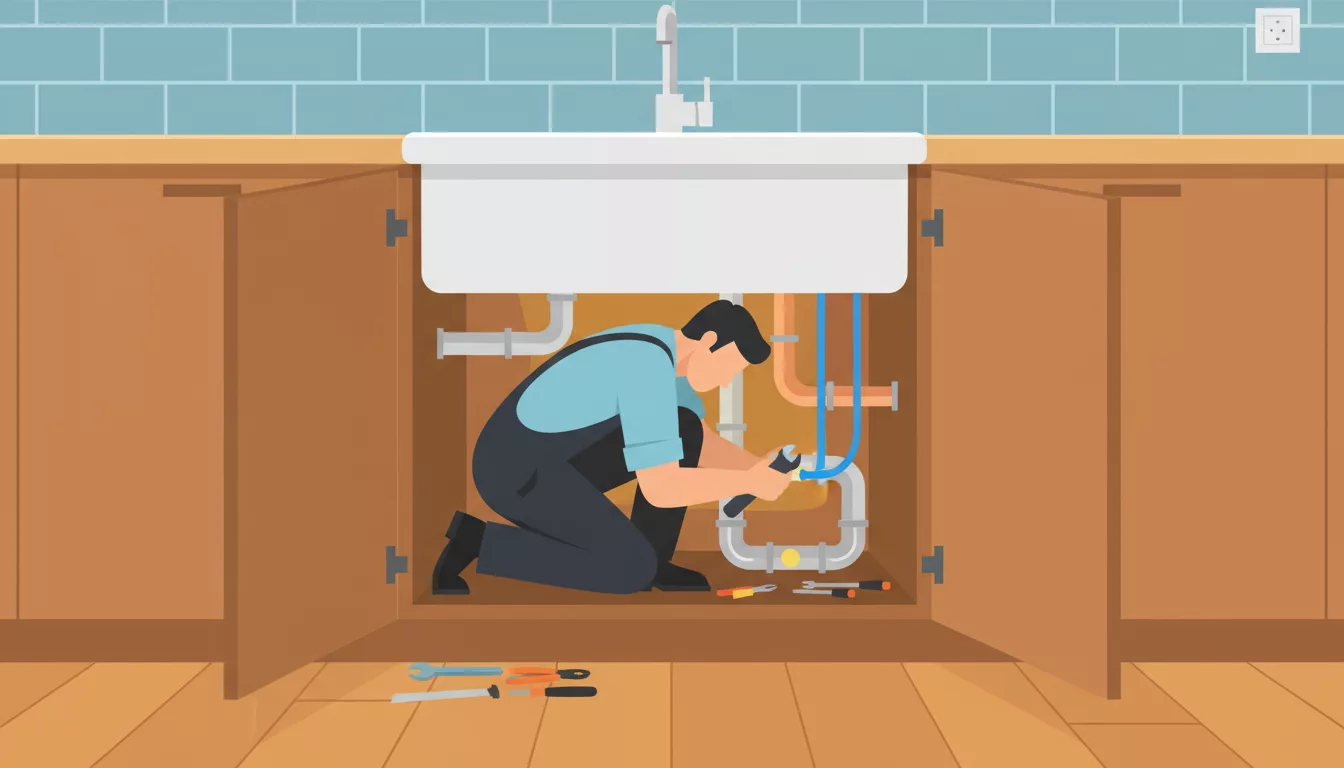
Under-sink work is the plumber's yoga. You're lying on your back in a cabinet, reaching past a garbage disposal and a water filter, trying to tighten a mounting nut that some engineer designed to be exactly 0.5 inches from the wall. Your neck will hurt tomorrow. Your back already hurts today. But the faucet works, the connections are dry, and the homeowner is happy. That's the afternoon.
3:30 PM: Wrapping Up and Paperwork
The last hour of a plumber's day is paperwork and preparation. You invoice the day's jobs, update your service records, and return any calls that came in during the afternoon. If you're an apprentice or journeyman working for a company, your dispatcher handles the scheduling. If you're running your own business - and many experienced plumbers do - you're also quoting tomorrow's jobs, ordering parts, and maybe posting to your business's social media.
You restock the van from your garage inventory, clean your tools, and lay out anything special you'll need for tomorrow's scheduled work. Plumbing tools take abuse - your pipe wrench jaws wear out, your tubing cutter wheel needs replacing, and your soldering torch tip is probably clogged from flux residue. Maintaining tools during downtime prevents problems during billable hours.
If you had an inspection scheduled and it passed, that's a good feeling. If it didn't pass, you're already planning the correction and the callback. Failed inspections happen to everyone, but consistently failing them means you're not keeping up with code changes - and interviewers will ask about your code knowledge if you're looking for a new position.
4:30 PM: Done for the Day (Sort Of)
A plumber's official day ends around 4 or 4:30, but the on-call rotation means you might get a call at 8 PM about a burst pipe in a crawl space. Emergency calls are part of the deal, especially in winter when frozen pipes are breaking and everyone needs help at the same time.
The evening is for recovery. Plumbing is physically demanding in ways that aren't obvious from the outside. You spend hours crouching, kneeling, reaching overhead, and carrying heavy pipe and equipment. Your hands take constant abuse from sharp fittings, hot solder, and chemical solvents. Experienced plumbers learn to stretch, wear knee pads religiously, and invest in good boots - your body is your primary tool and it needs maintenance just like everything else.
What Nobody Tells You About Being a Plumber
The money is better than most people realize. A licensed journeyman plumber in a mid-size city earns $55,000-$75,000. Master plumbers who run their own shops or work in commercial/industrial settings regularly clear $90,000-$120,000. In high-cost areas or union markets, six figures is common. The path from apprentice to well-compensated professional takes 4-5 years, which is faster and cheaper than most college degrees. (See actual numbers in our plumber salary breakdown.)
You're solving real problems every day. There's a satisfaction in plumbing that desk jobs can't replicate. You show up to a house where water is pouring through the ceiling, and two hours later everything is dry, repaired, and working. The homeowner is genuinely grateful. That feedback loop - problem, solution, gratitude - is immediate and tangible in a way that quarterly business reviews can never be.
The gross factor is real but manageable. Yes, plumbers deal with sewage. Yes, you will crawl through spaces that haven't been entered since the house was built in 1962. Yes, you will encounter things under sinks and in drain lines that defy description. But you learn to gear up properly - gloves, eye protection, sometimes respirators - and it becomes just another part of the job. The plumbers who complain loudest about the gross stuff are usually the ones who haven't been doing it very long.
Every house is different, and that keeps it interesting. Unlike factory work, plumbing never becomes completely routine. An 1890s Victorian has galvanized steel and cast iron. A 1970s ranch has copper and ABS. A new construction has PEX and PVC. Each material, each era, each building style presents different challenges. You're constantly problem-solving, and if you're the type of person who gets bored doing the same thing twice, plumbing has you covered.
The trades shortage is your job security. The average plumber in the U.S. is in their mid-50s. Retirements are outpacing new apprentices by a wide margin. This means experienced plumbers have enormous leverage - they can negotiate pay, choose their employer, or start their own business knowing that demand isn't going anywhere. Water still flows downhill, and someone has to make sure it flows where it's supposed to.
Is Plumbing Right for You?
Plumbing works for people who want a stable, well-paying career without four years of college and six figures of student debt. You need mechanical aptitude, problem-solving ability, and the willingness to work in uncomfortable conditions. You don't need to be exceptionally strong, but you need to be physically capable - there's a lot of kneeling, crawling, and carrying.
The apprenticeship path is straightforward. Most states require 4-5 years of supervised work plus classroom hours to qualify for a journeyman license. During that time, you're earning while you learn - apprentice plumbers start at $35,000-$45,000 in most markets, and the pay goes up every year as your skills develop.
The trade rewards competence. A plumber who shows up on time, diagnoses accurately, works clean, and communicates well with customers will never be short on work. These are not exceptional qualities - they're basic professionalism - but enough plumbers lack them that the ones who have them stand out immediately.
Ready to get started? Read our complete guide to becoming a plumber, prepare with real plumbing interview questions, or check the latest plumber salary data to see what you could earn.